Which drugs matter for your MDR1 dog.
If your dog is a Collie, Australian Shepherd, or another herding or sighthound breed, the MDR1 gene changes how it handles certain medicines. Pick the breed, pick the drug, get a calm, cite-pinned answer — then talk to your vet.
Runs in your browser. Nothing about your dog is logged or sold. Informational, not veterinary advice.
- Cited to WSU veterinary pharmacology
- Browser-only — no data on your dog leaves the page
- Calm and factual — never panic
Pick your dog's breed
The breed sets the baseline likelihood of the MDR1 mutation. Only a DNA test confirms an individual dog's genotype.
We cover 13 at-risk breeds and 16 drugswith documented MDR1 relevance. Drug classifications come straight from the Washington State University Veterinary Clinical Pharmacology Laboratory — the lab that discovered the mutation. If a drug isn't cite-pinnable to a primary source, we leave it out rather than guess.
How it works
A clear answer in three steps
No account, no email, no countdown timers. The whole thing runs on your phone or laptop.
Pick the breed
Choose your dog's breed to set the baseline likelihood of the MDR1 mutation, cited to WSU's frequency table.
Pick the drug
Search by drug name, brand (Imodium, Heartgard), or class. We only list drugs we can trace to a primary source.
Answer the dose question
For drugs like ivermectin where the dose changes everything, a quick dose-tier step gives the right answer.
Get a cite-pinned verdict
A calm Class A / B / dose-tier verdict with the WSU citation, a print-for-vet card, and a link to the full drug page.
At-risk breeds
Is your dog's breed on the list?
Frequencies are the share of dogs in each breed carrying at least one copy of the mutation, per WSU. A breed's frequency is a population figure — only a DNA test confirms your individual dog.
- 70%carry the mutation
Collie
The highest documented MDR1 frequency of any breed — roughly three of every four US Collies carry the mutation.
Breed page & drug checker - 50%carry the mutation
Australian Shepherd
About half of Australian Shepherds carry at least one copy of the MDR1 mutation, per WSU.
Breed page & drug checker - 50%carry the mutation
Miniature Australian Shepherd
The Miniature Australian Shepherd shares the standard Aussie's ~50% MDR1 frequency on the WSU table.
Breed page & drug checker - 50%carry the mutation
Long-haired Whippet
Roughly half of Long-haired Whippets carry the mutation — a notably higher frequency than the standard Whippet.
Breed page & drug checker - 30%carry the mutation
McNab
About 30% of McNab dogs carry at least one MDR1 mutant allele, per the WSU table.
Breed page & drug checker - 30%carry the mutation
Silken Windhound
Roughly 30% of Silken Windhounds carry the mutation — another sighthound on the WSU list.
Breed page & drug checker - 15%carry the mutation
English Shepherd
About 15% of English Shepherds carry an MDR1 mutant allele, per the WSU table.
Breed page & drug checker - 15%carry the mutation
Shetland Sheepdog (Sheltie)
Roughly 15% of Shetland Sheepdogs carry the mutation, per the WSU table.
Breed page & drug checker
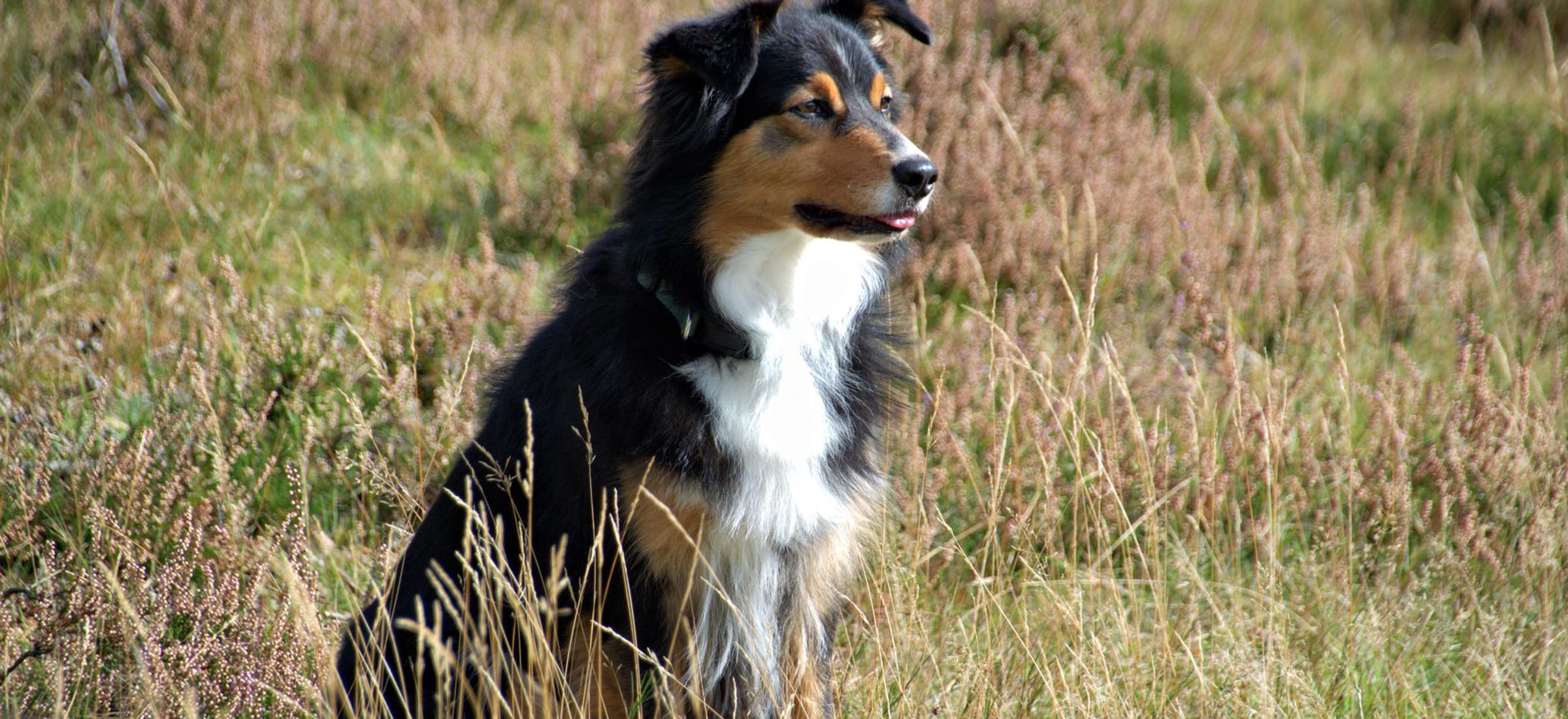
Calm, not panic
An at-risk breed isn't a fragile dog.
MDR1 is a manageable risk profile, not a death sentence. The mutation affects a specific, knowable list of drugs at specific doses. Knowing the list — and flagging it with your vet — is the whole job.
A drug-safety reference
We crosswalk breed and drug against WSU's published MDR1 classifications so you can walk into your vet appointment informed — not so you can self-treat.
Not a veterinary clinic
We don't diagnose, prescribe, or examine your dog. Every output ends with the same rule: talk to your vet before acting. They know your dog; we know the drug list.
Cite-pinned, not guessed
Every drug claim links to a primary WSU source with a last-verified date. Drugs we couldn't confirm against a live primary source are listed as omitted, not invented.
Common questions
Before you ask your vet
This is general information, not veterinary advice for your dog. It does not diagnose or prescribe. Always discuss any medication decision with your veterinarian before acting — they know your dog's full picture, including its MDR1 status if it has been tested. See our disclaimer and how we research.
Free · browser-only · cite-pinned
Check a drug against your dog's breed
A calm, WSU-sourced answer in under a minute — then take it to your vet.
Informational, not veterinary advice. Always confirm any medication decision with your veterinarian.